If you have been priced out of the coast but still want a foothold in Monterey County real estate, Salinas deserves a closer look. Small multi-unit properties here can offer a more approachable entry point than nearby coastal markets, but they also come with local rules and due diligence that you cannot afford to gloss over. In this guide, you’ll get a practical look at how duplexes, triplexes, fourplexes, and ADU plays work in Salinas, what drives income, and where buyers often make mistakes. Let’s dive in.
Why Salinas draws small investors
Salinas sits in a different price lane than many nearby Monterey County markets. Census Reporter shows a median owner-occupied home value of $687,700, while Redfin reported a March 2026 median sale price of $699,000 in Salinas, compared with a county median sale price of $872,500. That gap helps explain why investors often look inland first.
This is still not a bargain market by national standards. But compared with Monterey and Pacific Grove, Salinas can offer a lower entry point for buyers who want rental income potential without stepping into a much higher coastal acquisition cost. For many investors, that makes Salinas more of a practical numbers market than a lifestyle-driven purchase.
Demand fundamentals also matter. Bay Area Equity Atlas reports that 53% of Salinas households are renters, and 52% of renters are rent-burdened. Paired with Census Reporter data showing a median household income of $87,837 and an average household size of 3.8 persons, that points to steady demand for functional rental housing.
The local economy supports that picture. City information identifies agriculture as a core part of the economy, along with major employers such as Dole Fresh Vegetables, Monterey County, and Salinas Valley Memorial Hospital. In plain terms, Salinas functions more like a working renter market than a second-home market.
What counts as small multi-unit
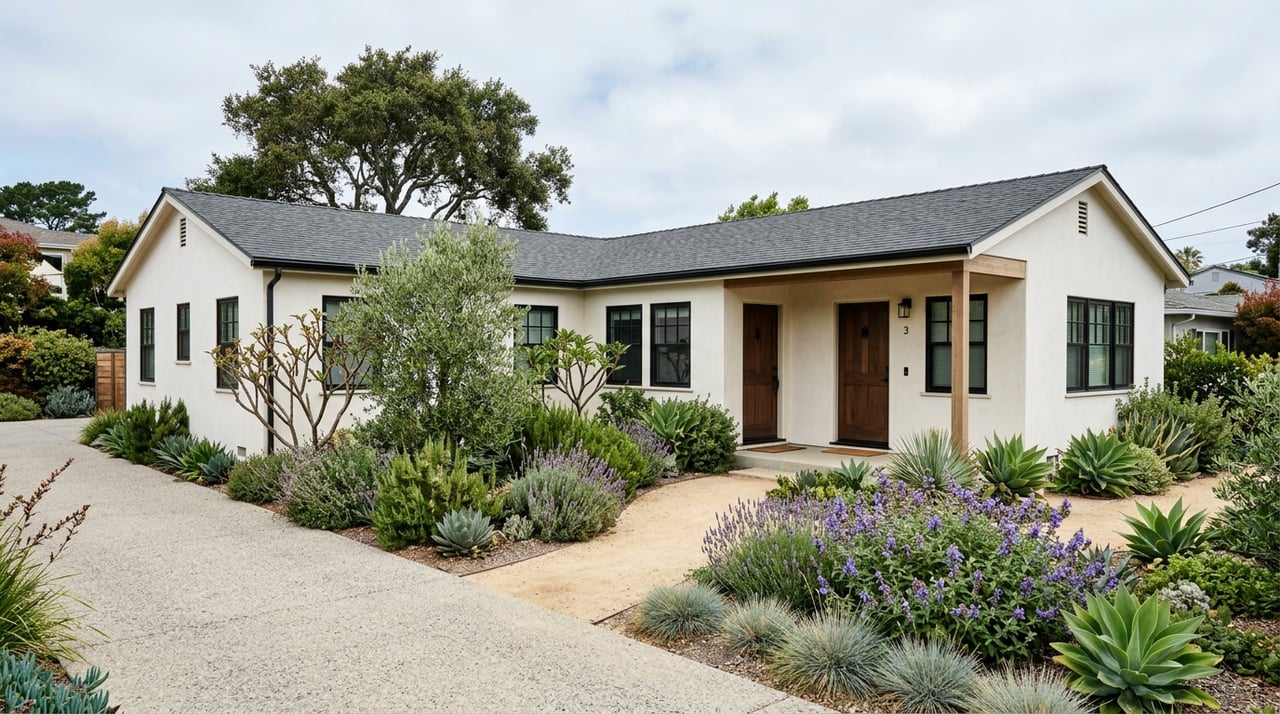
In Salinas, the small multi-unit conversation usually starts with duplexes, triplexes, and fourplexes. City materials use the term multi-family broadly and note that it can include a duplex, triplex, apartment building, or multiple livable structures on one parcel. That means the property type is only part of the story.
The legal setup matters just as much as the physical layout. Zoning, permit history, and how the parcel has actually been used all need to line up before you assume a property can operate as an income property or support future changes. A building that looks like a multi-unit opportunity may not always match the city record in the way you expect.
Inventory is also thin. Redfin showed only 6 multi-family listings in Salinas, with a median listing price of $849,000. When supply is that limited, buyers need to be ready to evaluate opportunities quickly and carefully.
ADUs can change the math
If you are thinking beyond a straight duplex or fourplex purchase, accessory dwelling units may create another path. Salinas says one detached ADU and one junior ADU are allowed on a single-family lot. On a multi-family lot, the city allows two detached ADUs, and it also allows conversion of at least one unit or 25% of units from existing non-habitable space.
That matters because value-add in Salinas is not always about buying a bigger building. In some cases, the better opportunity is a property with room to add rentable space through an ADU strategy, subject to parcel conditions and approvals. This can be especially useful if you want to increase income without taking on a large apartment project.
The approval process is also worth noting. The city says ADU permits are approved within 60 days, and it does not charge city development or traffic impact fees for ADUs, although school district or water district fees may still apply. Those details can materially affect your budget and timeline.
Know the 10-unit threshold
For many small investors, Salinas’ inclusionary housing rule is more of a boundary line than a direct issue. The city states that the rule applies to projects that create 10 or more dwelling units or lots. In most duplex, triplex, and fourplex acquisitions, that threshold will not usually be triggered.
Still, you should not treat that as a free pass. If your plan includes major expansion, redevelopment, or a larger entitlement path, you need to verify how the city views the scope of work for that specific parcel. Small deals can become more complicated when the future plan changes.
Location matters in practical ways
In Salinas, location analysis should stay grounded in function. Rather than leaning on lifestyle labels, it is more useful to think about employment access, transit connections, daily services, parking, and ease of leasing. Those factors often have a direct effect on vacancy, tenant retention, and rent levels.
City pages highlight the agriculture-based economy, an intermodal transit center, and a concentration of civic and employment uses. Properties with convenient access to jobs, transit, and everyday needs may be easier to lease than more isolated properties with weak access or limited parking. That is the kind of location advantage that can show up in your numbers over time.
The Housing Authority of the County of Monterey adds another practical lens. It notes that rent reasonableness is tied to square footage, bedroom count, amenities, location, neighborhood quality, and overall condition. For underwriting, that means broad assumptions are risky, and property-specific details matter.
What drives rent in Salinas
For small multi-unit properties, the biggest rent drivers are usually straightforward. In Salinas, unit size, bedroom count, parking, property condition, location, and utility setup all play a big role in what a unit can realistically command. In a renter-heavy market, functionality tends to matter a lot.
Payment standards from the Housing Authority of the County of Monterey can offer a useful benchmark. Effective January 1, 2026, the payment standard in the Salinas MSA is $2,684 for a 2-bedroom unit and $3,623 for a 3-bedroom unit. These numbers are not a guarantee of market rent, but they can help you frame expectations.
Bedroom mix is especially important here. Given the household size data and renter profile, practical 2- to 4-bedroom layouts may have stronger demand than smaller or less efficient floor plans. That does not replace a property-specific rent analysis, but it can help you understand why layout matters so much in this market.
Underwrite expenses carefully
Gross rent is only half the story. In Salinas, a small multi-unit underwriting model should include mortgage debt service, property taxes, insurance, maintenance, capital repair reserves, turnover costs, vacancy, management, and compliance-related costs. If you skip any of those line items, the deal may look better on paper than it performs in real life.
Property tax timing is one detail buyers often overlook. Monterey County bills secured property taxes in two installments due November 1 and February 1. Even though the amount will vary by parcel and assessed value, your cash-flow planning should account for those dates.
Utilities also deserve close attention. City income-and-rent tables note that when a tenant pays utilities, the maximum rent must be reduced by the Housing Authority of the County of Monterey’s utility allowances. Even if you are not working with restricted rents, the larger lesson is clear: owner-paid and tenant-paid utility structures can materially change net income.
Salinas rental rules affect value
This is one of the most important parts of the analysis. As of May 2026, Salinas’ rental-registration, rent-stabilization, just-cause, and tenant anti-harassment ordinances remain in effect because the City Council placed a repeal ordinance on the November 3, 2026 ballot. If you are buying a small multi-unit property here, local compliance is part of the investment case.
The city requires landlords to register residential rental properties. For 2026, fees are $29 per unit for units not subject to the Rent Stabilization Ordinance and $112 per unit for units subject to it. Those are not huge numbers by themselves, but they belong in your expense model.
The city says the Rent Stabilization Ordinance generally applies to multi-family dwellings built before February 1, 1995. It also states that the annual allowable increase is the lesser of 2.75% or 75% of the most recent 12-month CPI-U change, with only one rent increase allowed in any 12-month period. For older properties, this can significantly shape your income growth assumptions.
State law matters too. California’s Tenant Protection Act, commonly known as AB 1482, can apply depending on the property and any available exemptions. The key takeaway is simple: you need to verify whether a property is subject to Salinas local rules, AB 1482, both, or an exemption, because the most restrictive applicable rule controls.
Older buildings need deeper diligence
Salinas can offer upside through repositioning, but older buildings call for more careful review. City code enforcement addresses unsafe structures, substandard housing, zoning violations, and unauthorized property uses. That should put permit history and occupancy history near the top of your checklist.
Pay close attention to recent remodels, unit counts, and any signs that additional spaces were added without proper approvals. In a small multi-unit deal, an unpermitted unit can affect financing, insurance, rent assumptions, and future resale value. What looks like extra income today can become a problem during escrow or after closing.
This is why due diligence in Salinas should go beyond the rent roll. You want to confirm how the property is classified, what has been permitted, whether rental registration requirements apply, and whether the current setup matches city records. Strong underwriting starts with clean facts.
A simple framework for evaluating deals
If you are comparing small multi-unit opportunities in Salinas, keep your process focused on a few core questions:
- What is the legal unit count according to city records?
- What zoning and permit history support the current use?
- Is the property subject to local rent stabilization, AB 1482, both, or an exemption?
- What are the realistic rents based on bedroom count, condition, parking, and utility setup?
- What expenses need to be modeled, including registration fees, taxes, vacancy, turnover, and reserves?
- Is there ADU or conversion potential that is actually supportable on that parcel?
- How well does the location serve employment access, transit, parking, and daily needs?
That kind of checklist helps you avoid the biggest trap in small multi-unit investing: paying for upside that is not legally, physically, or financially realistic.
The bottom line on Salinas
Salinas can make sense if you want a Monterey County investment market with a lower entry point than the coast and real rental demand behind it. The opportunity is not just in buying a duplex or fourplex. It may also come from a property with strong bedroom mix, practical access, and room for an ADU or careful repositioning.
At the same time, this is not a market where you can underwrite loosely. Local rent rules, permit history, older-building condition, utility structure, and compliance costs all have a real impact on performance. If you approach Salinas with a clear process and parcel-specific diligence, small multi-unit properties here can be easier to understand and evaluate.
If you are weighing a small multi-unit purchase in Salinas and want local guidance grounded in Monterey County market knowledge, connect with Carmel Valley Realty Company. Our team offers thoughtful, high-touch advice to help you evaluate opportunities with clarity and confidence.
FAQs
What counts as a small multi-unit property in Salinas?
- In Salinas, small multi-unit properties commonly include duplexes, triplexes, fourplexes, and in some cases multiple livable structures on one parcel, depending on zoning and permit history.
Are Salinas multi-unit properties cheaper than coastal Monterey County properties?
- Generally, Salinas has a lower median sale price than Monterey County overall and lower pricing than nearby coastal markets such as Monterey and Pacific Grove, though it is still not a low-cost market by national standards.
Can you add an ADU to a Salinas investment property?
- In many cases, yes. The city says one detached ADU and one junior ADU are allowed on a single-family lot, while multi-family lots may allow two detached ADUs and certain conversions of existing non-habitable space.
Do Salinas rent control rules affect small multi-unit investments?
- They can. Salinas says its rent stabilization and rental registration rules remain in effect as of May 2026, and older multi-family properties may be subject to local limits on rent increases and other requirements.
What expenses should you include when underwriting a Salinas duplex or fourplex?
- You should account for mortgage payments, property taxes, insurance, maintenance, reserves, vacancy, turnover, management, utilities, and local compliance costs such as rental registration fees when applicable.
Why is permit history important for Salinas income properties?
- Permit history helps confirm legal unit count, approved use, and whether additions or remodels were properly authorized, which can affect financing, compliance, rental income, and resale value.