Thinking about a Monterey condo for your next home or coastal getaway? You are not alone. Condos can offer a simpler, lower‑maintenance path into the peninsula lifestyle, often at a price below single‑family homes. In this guide, you will see the true costs, the real benefits, and the key checks to make before you buy so you can choose with confidence. Let’s dive in.
Prices and rates current as of March 3, 2026. Always verify live MLS data, HOA documents, and lender quotes.
What you get with Monterey condos
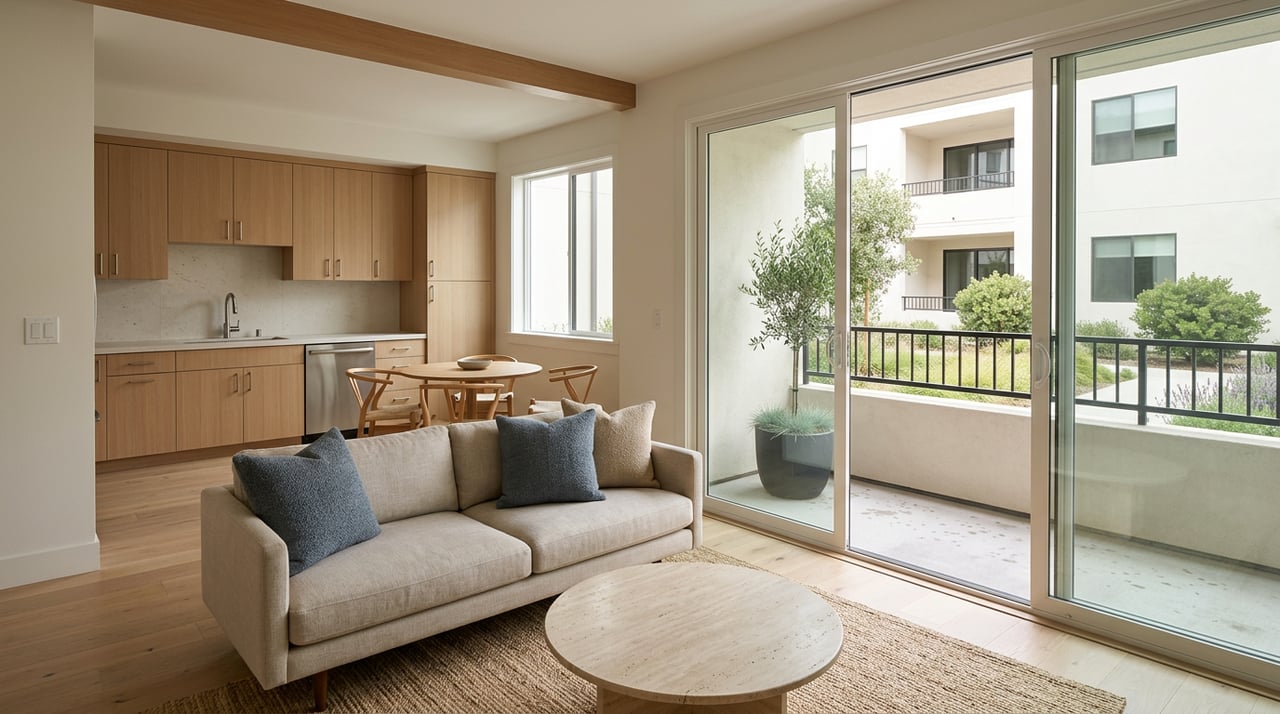
Monterey’s condo market is compact, with listings typically numbering in the dozens at any given time. You will find everything from efficient 1‑bedroom units in garden or mid‑rise settings in areas like New Monterey and Montsalas to larger, higher‑amenity homes near Del Monte Beach and neighboring Pebble Beach.
- Entry and downsizer units: 1‑bed or smaller 2‑beds, about 500 to 1,100 square feet. These often appeal if you want lock‑and‑leave convenience.
- Mid‑range: 2‑bed, 2‑bath plans with assigned parking and in‑unit laundry. Amenities may include a pool, clubhouse, or gated parking.
- Higher‑end: Larger floor plans with garage parking and resort‑style amenities. Expect higher monthly dues that may cover more services.
What it costs to own a condo
Condos are often an easier on‑ramp to Monterey than single‑family homes. Recent snapshots show a median condo listing price around $650,000, while the citywide median sale price across all home types sits near $1,085,000. Inventory and prices vary by building and neighborhood, so you will want current comps when you are ready to tour.
A simple mortgage illustration
To show scale, assume a 30‑year fixed at a recent benchmark average of 5.98% from the Freddie Mac Weekly Mortgage Survey, with 20% down. On a $650,000 condo, the loan amount would be $520,000 and principal and interest would be about $3,111 per month. On a $1,085,000 home, the loan would be about $868,000 and principal and interest about $5,193 per month. These figures exclude property taxes, HOA dues, insurance, PMI, and utilities. Always recalculate with your lender’s live quote.
HOA dues and what they cover
Monthly HOA dues in Monterey range widely, roughly from the low $300s to $1,000+ per month depending on location, amenities, and services. Dues often cover exterior maintenance, landscaping, common‑area insurance, management, and sometimes utilities such as water, sewer, or hot water. Always confirm the exact inclusions in the association budget and master insurance policy summaries.
Property taxes in Monterey
California’s Proposition 13 sets a base rate near 1% of assessed value, plus local voter‑approved assessments. Effective total rates in Monterey County often land around 1.1% to 1.4%. For a practical overview, see this Monterey County property tax guide, and use the county assessor’s parcel lookup for exact figures when you are in contract.
Condo insurance, master policy, and your HO‑6
As an owner, you will carry an HO‑6 condo policy to insure your interior finishes, personal property, liability, loss of use, and typically loss‑assessment coverage. The HOA’s master policy might be “walls‑out,” “walls‑in,” or “all‑in,” which changes what you must insure. Learn the basics in this consumer guide to HO‑6 coverage. One common gap: large master‑policy deductibles can be assessed to owners after a covered loss. Ask about the deductible amount and consider loss‑assessment coverage limits.
Reserves and special assessments
California HOAs must complete a written reserve study at least every three years and disclose reserve funding in the annual budget, as outlined in the Davis‑Stirling framework. A clear overview of reserve study requirements is here: California reserve study requirements. Practically, many advisors view reserve funding under about 50% as a concern, and under about 30% to 40% as a red flag. Low reserves and deferred maintenance often lead to special assessments that raise your monthly cost. For a practical review process, use this guide to reading HOA documents.
Coastal factors to plan for
Monterey’s marine environment is part of the charm and part of the maintenance plan. Salt air can accelerate corrosion of exterior metal elements such as railings, fasteners, window hardware, and light fixtures. Deck and balcony waterproofing, window seals, roof flashing, and common plumbing stacks deserve close attention during inspections. Local managers note that coastal buildings benefit from coastal‑grade finishes and stainless or corrosion‑resistant hardware; here is a helpful overview of property preservation best practices.
Flood and sea‑level exposure varies by parcel. If a building sits low or near the shoreline, review mapping tools like the NOAA Sea Level Rise resources for California. Flood insurance is separate from your HO‑6. If the condo is in a FEMA Special Flood Hazard Area, most lenders will require flood coverage. For a primer on flood risk and assessments, see this flood risk assessment overview.
Short‑term rental rules, read before you buy
If you plan to rely on vacation‑rental income, stop and verify rules early. The City of Monterey has historically prohibited whole‑unit rentals of fewer than 30 days in residential zones, and it enforces listing rules. See a summary of local city positions compiled by the Monterey County Vacation Rental Alliance. In unincorporated areas of Monterey County, a newer regulatory program sets permits, limits, and coastal‑zone specifics. Review the county’s short‑term rental permit page for current requirements. Your HOA’s CC&Rs may add rental caps or minimum terms on top of city or county rules.
If you plan to short‑term rent, confirm the following:
- City permit status and zoning allowances for your address.
- County coastal permit status if outside city limits.
- HOA rental rules, caps, and minimum lease terms in the CC&Rs.
- Transient occupancy tax registration and local parking or occupancy limits.
HOA due‑diligence checklist
Getting the right documents and asking the right questions can prevent costly surprises. Request these items as early as possible in escrow.
Documents to request
- CC&Rs, bylaws, and rules and regulations.
- Current operating budget and recent financial statements.
- Most recent reserve study and current reserve balance with percent funded.
- Meeting minutes for the past 12 to 24 months.
- Master insurance declarations page and deductible amounts.
- Resale or estoppel certificate and any lender questionnaires.
- Litigation disclosures and any owner‑delinquency summaries.
For a practical walkthrough of what to look for, see this step‑by‑step HOA document review guide.
Key questions to ask
- What is the current reserve balance and percent funded, and when was the last full reserve study completed?
- Are any special assessments planned or approved, or major projects on the near horizon?
- What does the master policy cover inside the unit, and what do owners insure? What is the master deductible?
- What is the owner delinquency rate for dues? Any liens or large unpaid assessments?
- Is the association in any pending litigation, and what is the potential cost to owners?
- What are the rental rules, including caps and minimum lease terms?
- What are the parking, pets, storage, renovation, and EV‑charging rules?
Red flags to watch
- Reserve funding materially below recent recommendations, especially under about 30% to 40%.
- Repeated or large special assessments in recent years.
- Pending litigation that could lead to material costs.
- Very high master‑policy deductible or unclear plan to fund it.
- High owner‑delinquency rates or unusual ownership concentration.
Financing and resale considerations
Many lenders require that a condo project be warrantable to meet conventional, FHA, or VA standards. High rental ratios, pending litigation, low reserves, or recent big assessments can complicate financing and resale. For an overview of project‑eligibility themes, see this condominium approval requirements summary. Have your lender check project eligibility and any single‑unit exception paths early in your process.
Condo vs single‑family in Monterey
Every buyer balances convenience, cost, and control differently. Here is a quick comparison to help you sort priorities.
- Pros of a condo: Lower entry price than many single‑family homes, shared exterior maintenance, on‑site amenities, and lock‑and‑leave simplicity near the bay or downtown.
- Cons of a condo: Monthly HOA dues, less private outdoor space, rules that may limit rentals or renovations, and exposure to community decisions and special assessments.
If you want turnkey living close to the water and dining, a condo can be ideal. If you need a private yard, a garage workshop, or full control over exterior improvements, consider the single‑family route and compare total monthly costs, including taxes, insurance, utilities, and an allowance for maintenance.
Your next step
Choosing the right Monterey condo is about more than price per square foot. It is about the HOA’s health, coastal resilience, and how well the community fits your lifestyle. If you would like help matching those pieces, our boutique team is here with local insight and high‑touch service. Connect with Carmel Valley Realty Company to review live listings, request a tailored HOA due‑diligence plan, or to request a Home Valuation.
FAQs
What are typical HOA dues for Monterey condos?
- Many associations range from the low $300s to $1,000+ per month, depending on location, amenities, and what utilities or services are included. Always confirm the latest budget and inclusions.
How do Monterey condo property taxes work under Prop 13?
- The base is near 1% of assessed value, plus local assessments, with effective totals often around 1.1% to 1.4%. See this Monterey property tax guide and verify the parcel rate when in escrow.
Do I need flood or earthquake insurance for a Monterey condo?
- Flood and earthquake coverage are separate from a standard HO‑6. Lenders typically require flood insurance if the building is in a FEMA Special Flood Hazard Area. Review mapping like NOAA’s sea‑level resources and this flood‑risk overview.
Can I rent my Monterey condo on a short‑term basis?
- The City of Monterey has long limited whole‑unit rentals under 30 days in residential zones, and rules vary across the peninsula. Verify city policy via the MCVRA city summaries, check county rules for unincorporated areas at the Monterey County STR page, and confirm your HOA’s CC&Rs.
How can I avoid surprise special assessments in a condo?
- Request the reserve study, budgets, financials, and meeting minutes, and scan for low reserve funding or deferred projects. Many advisors flag reserves under about 30% to 40% as a red flag. Use this HOA document review guide and ask your agent and lender to weigh in early.